
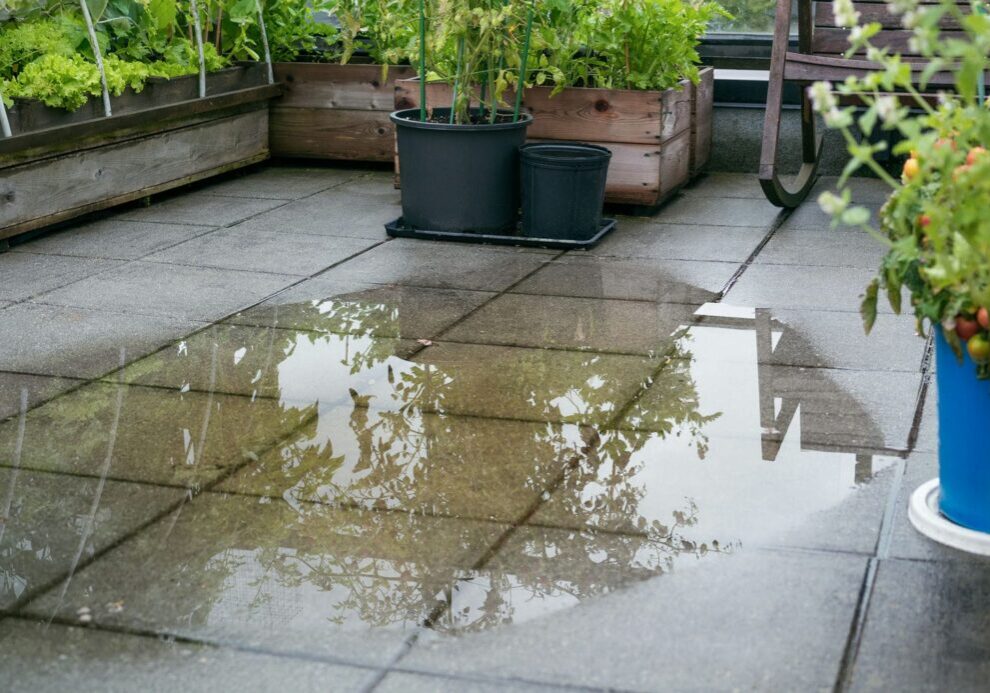
If water is pooling on your patio near the house, the cause is usually one of these: the patio slopes slightly toward the home, roof runoff is dumping onto the surface, a low spot formed from settlement, or the patio has no clear place for water to go. The fix is almost always a simple sequence: confirm where the water is coming from, create a reliable fall away from the home, and add a collection point only where water naturally concentrates. If you want a long-term solution (not a temporary patch), it helps to look at patio drainage the same way a custom patio builder plans grades and runoff from day one.
This guide walks you through a calm, step-by-step way to diagnose pooling, choose the right drainage option, and avoid common mistakes that make water problems worse. You’ll also see when a small retrofit is realistic, and when a partial reset or rebuild is the most stress-free path.
At A Glance
Patio drainage is not about adding a drain everywhere. It’s about giving water a predictable path so it does not collect near the foundation, doesn’t turn your patio into a slippery zone, and doesn’t soak the soil beside the home.
In Greater Vancouver, frequent rain makes small grading issues show up fast. If you handle slope and runoff first, your patio stays drier with less ongoing maintenance.
The Quick Fix Checklist For Patio Pooling Near The House
Start with quick checks before you choose products or start digging. Most patio pooling problems can be traced back to one or two items on this list, especially after heavy rain.
- Identify water sources: downspouts, roof edges, neighbouring grades, and irrigation overspray.
- Confirm the patio’s slope direction (water should move away from the home where possible).
- Find low points where water “chooses” to sit, especially at edges and transitions.
- Decide whether you need grading, a surface drain, or an infiltration solution.
- Plan for maintenance: grates, cleanouts, and access points you can actually reach.
If you only do one thing today, watch the patio during the next rainfall. Seeing where water arrives and where it gets trapped will save you time and guesswork.
What Patio Drainage Should Always Do
Good patio drainage keeps water from pooling at the house edge, especially near doors, thresholds, and foundation lines. It also prevents water from flowing toward the home during heavy rain, when runoff volume is highest.
Just as important, it gives water somewhere to go that won’t create a new problem. That means no dumping water onto a neighbour’s yard, no sending it back toward the foundation, and no hiding pooling under planters and hoping it dries.
Why Water Pools On Patios Near Homes
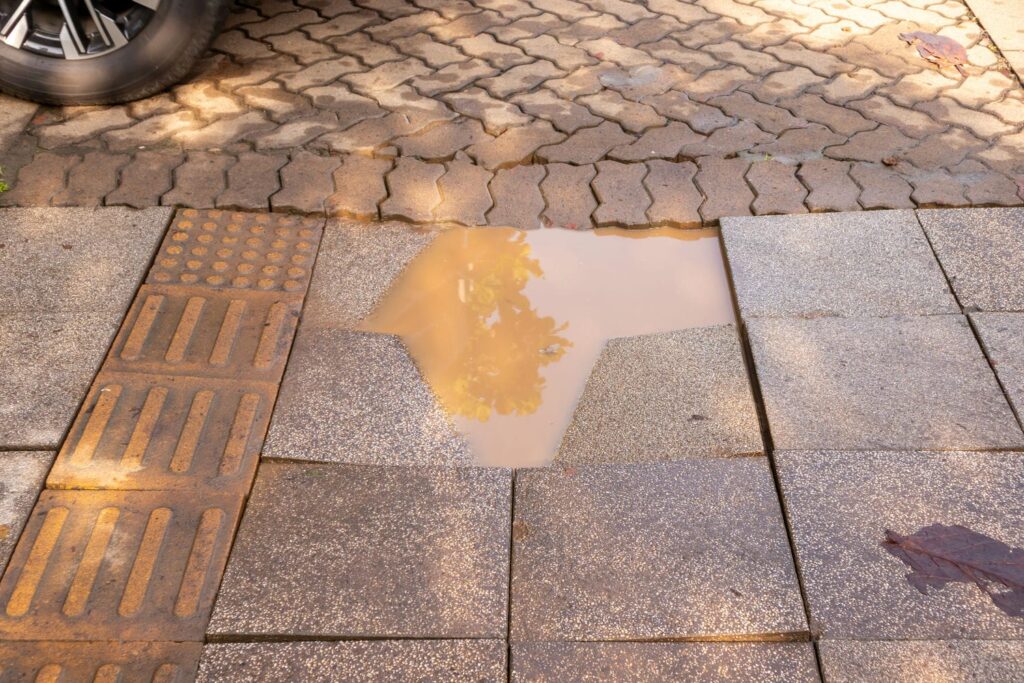
Pooling is rarely “random.” Water usually follows the same path every storm, then settles in the same low spots. Once you understand the pattern, the fix becomes much more straightforward.
Most patios that pool near the house have a combination of issues, not just one. For example, a downspout may add water volume, while a slight backfall keeps that water pinned against the home.
Slope Is Pointing The Wrong Way
Even a small backfall toward the house can cause repeated pooling. You might not notice it on a light rain, but a heavier rainfall will push water to the lowest edge, and that’s often the foundation side.
This is common on older patios where the base settled unevenly, or where the original grade was built too flat. “Almost level” looks good on day one, but it tends to hold water once the patio experiences real weather.
Roof Runoff And Downspouts Are Dumping Onto The Patio
Roof runoff can overwhelm a patio quickly, especially if a downspout discharges right beside the home and splashes onto the hard surface. Water hits the patio fast, flows along the easiest path, and then ponds where slope or edges stop it.
A simple improvement is often to redirect downspout discharge to a safer area that can absorb or convey water without sending it back to the patio edge. Metro Vancouver’s homeowner stormwater guidance is a good reference for practical runoff management around homes.
Settlement And Low Spots Developed Over Time
Low spots form when the base compacts unevenly, when soils move, or when water undermines a section over time. You often see this near steps, at the edge of a garden bed, or along a narrow side yard where water has fewer escape routes.
If you can spot one persistent “puddle zone” that appears after most rains, that’s usually a settlement or grading issue. It can often be fixed by resetting that area, rather than rebuilding the entire patio.
Drainage Has No Clear Exit Path
Some patios create a bathtub effect. Raised borders, walls, tight landscaping edges, and adjacent structures can trap water with nowhere to go. Even if the surface is sloped, the water may still hit a barrier and pond.
In these cases, drainage needs both a collection point and a planned discharge or infiltration route. Without that route, a drain can become a maintenance headache instead of a solution.
Why Pooling Near The House Is Worth Fixing
A little water on the patio is normal in rainy weather. The problem is persistent pooling right beside the home, especially when it happens in the same place and takes a long time to dry.
Fixing it early is usually simpler than waiting. Once water issues cause movement, joint breakdown, or algae buildup, the repair scope and cost tends to increase.
Moisture Stress At The Foundation Edge
When water repeatedly collects at the foundation line, it keeps the soil beside the home wetter for longer. That can create ongoing dampness around the edge of the building, especially in shaded areas where drying is slow.
This is not about panic. It’s about reducing unnecessary moisture exposure where you can, with grading and runoff control that keeps water moving away from the structure.
Slip Risk And Surface Damage
Pooling leads to slick spots, especially in shaded zones where algae or green buildup can take hold. It also accelerates wear on joints, edges, and base materials over time because water finds its way into the system and repeats the same cycle.
A patio that drains well is easier to keep clean. You spend less time fighting slippery patches, and more time using the space.
Yard Drainage Problems Often Follow
Patio pooling rarely stays contained. Once the patio edge saturates nearby soil, water can start to creep into adjacent lawn areas, garden beds, or side yards that already struggle to drain.
Over time, this can turn into a wider yard drainage problem. A patio drainage fix often improves the surrounding landscape too, because water has a cleaner, more controlled route.
Diagnose The Problem Before You Choose A Drain
Before you pick a drain style or call it a “grading issue,” it helps to do a short diagnosis. This keeps you from spending money on the wrong fix, like installing a drain where the real problem is slope, runoff, or base settlement.
A good diagnosis is simple and visual. You do not need special equipment to see how water moves during a storm.
Step 1: Watch The Patio During Heavy Rain
The best time to diagnose is when the problem is happening. Watch where water arrives first, where it speeds up, and where it slows down. That final “slow zone” is usually where pooling starts.
If you cannot watch during rainfall, look right after. You’ll often see water lines, debris trails, or darker areas that reveal the flow path.
Step 2: Check Transitions And Edges First
Most pooling near the home shows up at transitions: door thresholds, the patio-to-house edge, stair landings, and narrow side yards. These areas often have tight constraints, so water has fewer escape routes.
Also check edges where patio meets lawn or garden beds. A slightly raised edge can trap water on the patio surface, even if the centre is sloped.
Step 3: Identify The Water Type
Not all water problems behave the same way. Start by classifying what you’re seeing:
- Sheet flow: water spreads across a broad surface and moves slowly toward a low edge.
- Concentrated flow: water forms a channel, usually from a downspout, slope, or tight corridor.
- Slow drainage: water sits and takes days to dry, often tied to soil infiltration limits or trapped edges.
Once you know the type, you can choose the right strategy. Drains are best for concentrated flow. Grading helps sheet flow. Infiltration solutions help slow drainage, if soils allow.
Step 4: Decide If This Is A Surface Problem Or A Base Problem
If pavers rock, joints crack repeatedly, or the same low spot keeps returning, the issue may be below the surface. A drain won’t fix a base that is moving or holding water.
If the patio is stable and the pooling is clearly tied to slope direction or a downspout, you may be able to fix it with surface adjustments and a clean water path.
Patio Drainage Basics That Work In Rainy Climates
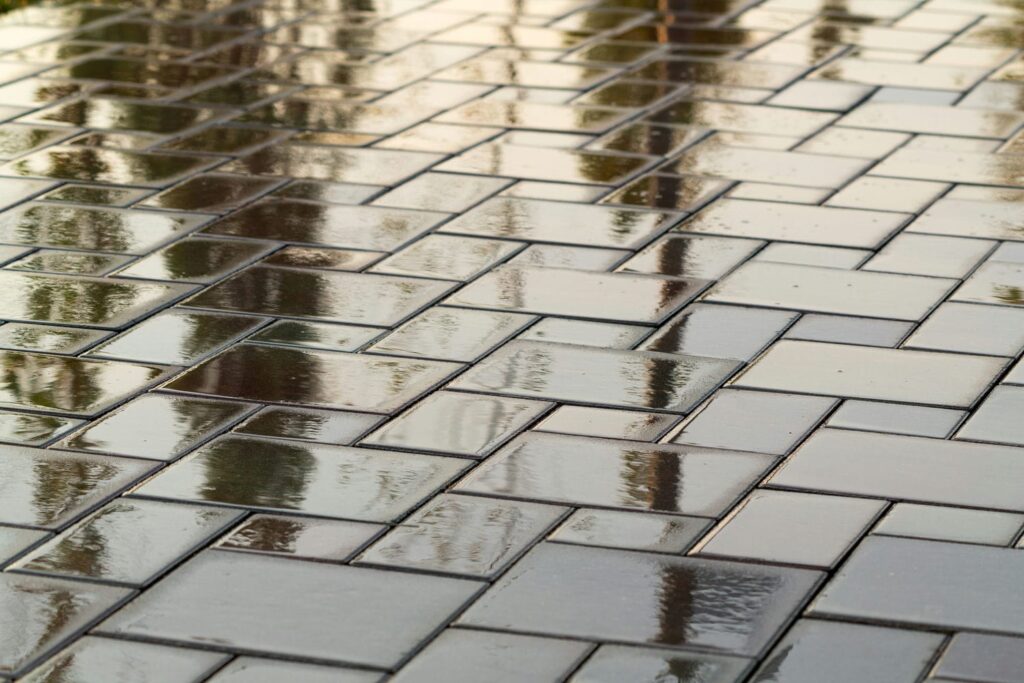
Rainy climates reward simple fundamentals. When slope and water paths are right, you often need fewer drains, fewer repairs, and less maintenance.
This section gives you the basics to aim for, whether you’re retrofitting an existing patio or planning a new one.
Create A Reliable Fall Away From The Home
A patio should encourage water to move away from the home, not toward it. That does not mean a steep slope. It means a consistent, intentional fall that still feels comfortable to walk on and use.
Flat patios are the common culprit. They might look neat, but they tend to leave water with no urgency to move, so it finds the lowest edge and sits there.
Collect Water Where It Concentrates
When water naturally funnels into a tight area (like a door line, narrow side yard, or stair landing), collection becomes more reliable than trying to “flatten” the problem away. This is where channel drains and catch basins make sense.
The goal is to collect water at the point of concentration, then move it somewhere safe. If you only collect without a plan for discharge, you create a new maintenance issue.
Give Water A Safe Discharge Or Infiltration Zone
Every drainage plan needs an endpoint. That endpoint might be an area that can absorb water (like a designed infiltration zone) or a conveyance route that moves water away from the home without affecting neighbours.
If you are connecting to municipal storm infrastructure or making major changes near property lines, check your local requirements first. A good plan solves your problem without creating a downstream one.
Drainage Options For Patios
There isn’t one “best” patio drainage method. The right choice depends on your patio layout, slope, runoff sources, soil behaviour, and how close the water is to the home.
The options below are the most common, along with when they tend to work well in the Lower Mainland.
Regrading And Resetting The Patio Surface
If your patio has a slight backfall or a few low spots, regrading can be the cleanest fix. That usually means lifting and resetting a section to restore slope and remove the “dish” that holds water.
This is often more effective than adding a drain when the root cause is simply the surface shape. Once the patio has proper fall, water has less reason to pond in the first place.
Channel Drains For Door Lines And Tight Side Yards
Channel drains work well where the patio meets the house, especially near door thresholds, where you want a clear line of defence against surface water. They collect water quickly and keep it from hugging the foundation edge.
The key is planning the outlet. A channel drain needs a safe discharge route, and it needs to stay accessible for cleaning. If it is buried under furniture or planters, it won’t stay functional long-term.
Catch Basins For Concentrated Low Points
If one spot always pools, a catch basin can be a straightforward solution. It collects water where it naturally settles, then routes it to a discharge or infiltration point.
Catch basins also need maintenance. Leaves, sediment, and organics build up over time, so the design should include access that makes cleaning realistic, not theoretical.
Infiltration Trenches And Rock Pits
An infiltration trench or rock pit is a below-grade storage area designed to hold water temporarily, then let it soak into the surrounding soil. This can work well when you have space and suitable soil conditions, and when you want to keep water on your property without surface pooling.
However, infiltration is not magic. If the soil drains slowly or the area is already saturated during rainy months, these systems need to be sized and detailed properly, and they must include measures to reduce clogging from fine sediments.
Permeable Patio Surfaces
Permeable patio systems allow water to move through joints and layers below, reducing surface pooling. They can be a good fit when you want less runoff and a patio that dries faster after rain.
They still need correct base design and ongoing care to prevent clogging. Many of the same grading and base principles apply to interlock and paver driveways.
Build Details That Prevent Pooling From Coming Back
Patio drainage should stay reliable for years, not just for one season. That reliability comes from build details that protect slope, keep edges stable, and avoid settlement that creates new low spots.
If you’re fixing a patio that already pools, this section helps you understand why the issue might return if the build details don’t match the water conditions.
Base Preparation And Compaction
A stable base keeps your finished slope consistent. When the base is under-compacted or uneven, the patio can settle in sections, creating a shallow bowl that holds water.
Good base work also supports drainage performance. It reduces the chance that water will “pump” fines and slowly undermine the patio in the same areas where pooling already occurs.
Edge Restraints And Borders
Edges hold the system together. If edge restraint fails, pavers can spread, borders can lift, and the patio can lose its intended grade. That change in grade is often what turns minor wetness into persistent pooling.
Borders can also trap water if they are raised or poorly detailed. A well-planned edge manages both movement and water flow, so the patio drains and stays locked in place.
Transitions To Walkways, Steps, And Landscape
Transitions are where drainage problems hide. The patio may slope correctly in the middle, but a step landing or a walkway connection can create a subtle dam that holds water near the house edge.
When you plan transitions as a continuous drainage system, water moves more predictably across the whole outdoor space. This is also why stone walkway installation should tie into patio grades, not fight them.
Managing Grade Changes With Walls Where Needed
On sloped properties, you sometimes need to shape the grade to create stable patio zones that drain properly. A wall can support that grade change and protect the drainage plan from erosion and settlement.
In these cases, drainage and grade control go together. A retaining wall contractor can help create the right structure so water moves away from the home without destabilizing the landscape.
Retrofit Patio Drainage Without Rebuilding Everything
Not every patio drainage issue requires a full rebuild. Many pooling problems can be improved with targeted changes, especially when the patio surface is stable and the issue is isolated to one area near the home.
The key is picking a retrofit that addresses the root cause. If you only treat the symptom, the pooling often returns in the same place.
When A Retrofit Works
Retrofits work best when the patio is structurally sound, and the pooling is caused by a clear water source or a small grading issue. Examples include redirecting a downspout, adding a channel drain at the house edge, or creating a controlled path to a garden infiltration zone.
A good retrofit still needs a plan. You want water to leave the problem area without creating a new pooling zone somewhere else on the property.
When You’re Better Off Resetting A Section
If one part of the patio has settled, a partial reset can be more effective than adding drains. Resetting restores the slope and removes the low point that is acting like a bowl.
This approach is often the most cost-effective middle ground. You fix what is wrong, keep what is working, and avoid the disruption of tearing out the entire patio.
When A Full Rebuild Is The Most Stress-Free Option
A full rebuild makes sense when pooling is widespread, the base is compromised, or multiple low spots keep appearing. In those cases, you can spend money on patchwork and still end up frustrated after the next wet season.
A rebuild also gives you a chance to improve the layout, transitions, and water paths in one coordinated plan. That’s often the simplest way to get predictable drainage and a patio you can enjoy year-round.
A Dry Patio Starts With A Clear Plan
Pooling near the home is usually a slope and runoff problem first, and a drain problem second. Once you know where the water is coming from and where it should go, the fix becomes much simpler and more durable. The goal is a patio that drains predictably, dries faster, and stays comfortable to use through the rainy season.
If you want a stress-free process, Umbrella Constructions can assess your patio drainage, recommend the right level of work (retrofit, partial reset, or rebuild), and deliver it with fixed-price contracts, a detailed build schedule, and structured updates with progress photos. If you’re planning a rebuild or want a long-term drainage-first design, start with a patio construction company that plans grades and water paths from the beginning.
FAQs
How Do I Stop Water Pooling On My Patio Near The House?
Start by identifying runoff sources, especially downspouts and roof edges, then confirm whether the patio slopes toward the home. If the surface directs water to the foundation edge, you may need regrading or a partial reset. If water concentrates at the house edge, a channel drain and a planned outlet can be the cleanest fix.
Do I Need A Drain Or Just Better Grading?
If pooling is caused by a low spot or a slight backfall, regrading or resetting a section can solve it without adding drains. If the patio layout forces water toward the house or into a tight corridor, a drain often works better because it collects water where it concentrates.
Can I Add Patio Drainage Without Removing My Patio?
Sometimes. Redirecting downspouts, adding a channel drain, or installing a catch basin can work if the patio base is stable. If settlement keeps returning, a partial reset is usually more reliable than adding more drainage hardware.
What’s Better For Patio Drainage: A Channel Drain Or A French Drain?
Channel drains collect surface water fast at key edges, like near doors and the patio-to-house line. French drains and infiltration trenches work below grade and can help where water moves through soil slowly. The best choice depends on whether your issue is surface pooling, saturated soil, or concentrated runoff.
Will Patio Pooling Cause Foundation Problems?
Persistent water at the foundation edge increases moisture exposure where you typically want things to stay dry. It can also lead to slippery surfaces and ongoing green buildup beside the home. Fixing pooling early with slope and runoff control is usually the most practical approach.
Are Permeable Pavers A Good Solution In Greater Vancouver?
They can help reduce surface pooling by allowing water to move through the surface. They still need a properly designed base and maintenance to prevent clogging, especially in areas where fines and debris collect during rainy months.
Where Should Patio Water Drain To?
Ideally, to a safe discharge or infiltration area on your property where water won’t flow back toward the home or toward neighbours. If you’re planning to connect to municipal storm infrastructure, check your local requirements before making changes.